

Professional manufacturer of asphalt equipment
Structure Design and Anti-corrosion Measures of Large-scale Asphalt Storage Tank
Release Date:
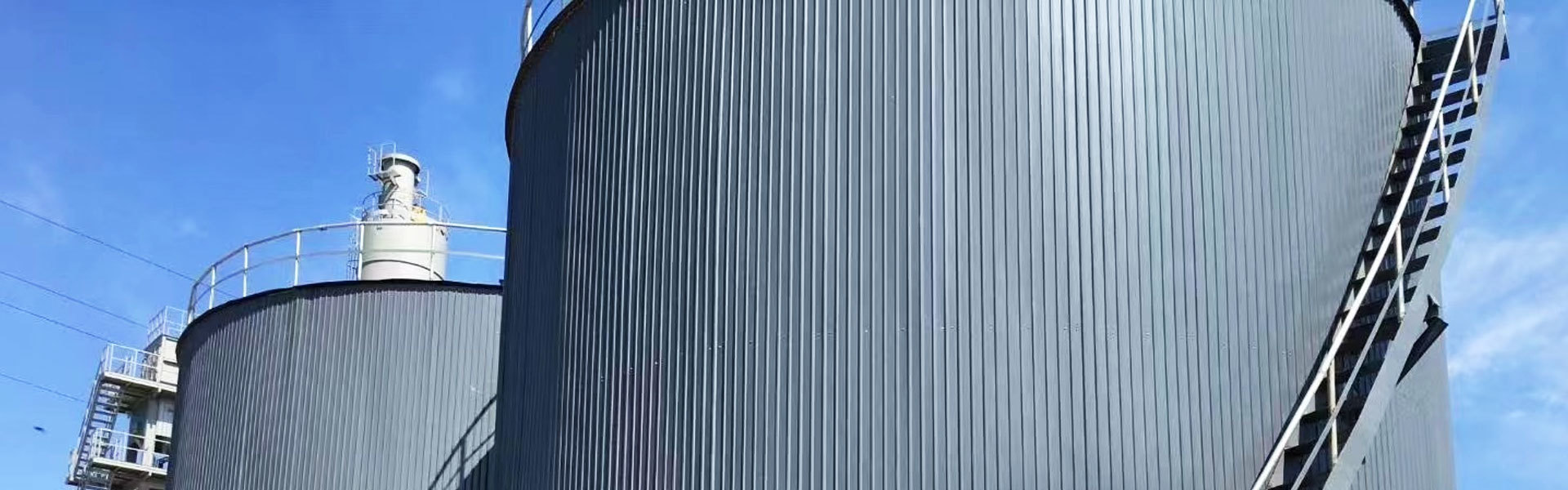
Large-scale asphalt storage tanks are core storage facilities in road construction, chemical industry and asphalt processing plants, which are used for long-term storage of liquid asphalt at constant
Large-scale asphalt storage tanks are core storage facilities in road construction, chemical industry and asphalt processing plants, which are used for long-term storage of liquid asphalt at constant temperature. Asphalt has special physical and chemical properties such as high viscosity, certain corrosiveness and high storage temperature. Meanwhile, large tanks are exposed outdoors all year round, enduring the combined effects of wind, rain, temperature difference and atmospheric erosion. Therefore, scientific overall structure design is the premise to ensure the stability and bearing capacity of the tank body, and targeted anti-corrosion measures are essential to extend the service life and avoid equipment failure. This article comprehensively expounds the key points of structural design for large asphalt storage tanks, as well as systematic anti-corrosion schemes for different parts and service environments.
The structural design of large-scale asphalt storage tanks follows the principles of safety, stability, reasonable stress distribution and convenient operation. The whole tank is mainly composed of tank foundation, bottom plate, tank wall, tank roof, manholes, access openings, connecting pipelines and internal supporting structures. The tank foundation is the key load-bearing part. According to the geological conditions of the site, reinforced concrete ring foundations or integral raft foundations are adopted. The foundation surface is kept flat and compacted to prevent uneven settlement. An inclined drainage slope is designed around the foundation to timely drain rainwater and accumulated water, so as to avoid long-term water soaking and softening the foundation. For ultra-large volume storage tanks, settlement observation points are reserved during construction to monitor the foundation state in real time during operation.
The tank bottom plate bears the weight of asphalt and the self-weight of the tank body. It is made of thickened carbon steel plates with good rigidity. The steel plates are connected by full welding to ensure overall tightness. Considering that asphalt deposits impurities and moisture at the bottom for a long time, the bottom plate is designed with a certain gradient toward the drain outlet, which facilitates regular dirt removal and sewage discharge. The tank wall adopts segmented steel plate rolling and welding structure. The wall plates at different heights are matched with different thickness specifications. The lower wall bears greater liquid pressure, so thicker steel plates are used, and the plate thickness gradually decreases from bottom to top, which realizes reasonable stress distribution and saves material cost. Reinforcement rings are installed on the outer side of the tank wall at intervals to enhance the overall rigidity and wind resistance of the tank body, preventing deformation under strong wind and external impact. All welding seams of the tank wall adopt multi-layer welding technology, and non-destructive testing is carried out after welding to eliminate welding defects such as air holes and cracks.
In terms of tank roof structure, large asphalt tanks mostly adopt vaulted roofs or floating roofs. Vaulted roofs have simple structure and good sealing performance, which can effectively reduce the volatilization of asphalt flue gas and isolate external rain and dust. Floating roofs move up and down with the liquid level of asphalt, which can greatly reduce the contact area between asphalt and air, slow down asphalt aging and gas volatilization, and is more suitable for large-capacity long-term storage. Supporting columns and connecting beams are arranged inside the tank to assist the roof in bearing force. All reserved openings such as manholes, material inlet and outlet, heating pipe interfaces and level gauge holes are reasonably arranged on the tank wall and roof. Reinforced structures are added around the openings to avoid stress concentration and local deformation. In addition, the tank body is equipped with escalators, operating platforms and guardrails to meet the safety requirements of daily inspection and maintenance work for staff.
Auxiliary structure design also needs to match the characteristics of asphalt storage. Since asphalt needs to be kept liquid by heating, the internal heating coil support frame is firmly welded on the tank bottom and tank wall to prevent the heating pipeline from shaking and falling off during asphalt flowing and stirring. The internal partition and flow guide structure are optimized to reduce the impact of liquid asphalt on the tank wall during feeding and discharging. All external connecting pipelines are provided with flexible connectors to buffer vibration and stress transmission between the pipeline and the tank body. Lightning protection and grounding structures are installed on the top and side of the tank to eliminate potential lightning strike risks in outdoor open-air environments.
Asphalt storage tanks face multiple corrosion sources in actual operation. The main types include atmospheric corrosion on the outer surface, liquid asphalt corrosion and electrochemical corrosion on the inner wall, as well as water and impurity corrosion at the tank bottom. Corrosion will cause steel plate thinning, welding seam leakage and structural strength decline, bringing serious safety hazards. Therefore, it is necessary to formulate layered and partitioned anti-corrosion measures for the inner and outer surfaces of the tank body.
The anti-corrosion treatment for the outer surface of the tank focuses on resisting atmospheric corrosion, rain erosion, ultraviolet aging and temperature alternation. Firstly, carry out thorough surface pretreatment for the outer steel plate, remove rust, oxide scale, oil stains and old paint layers by sand blasting or mechanical polishing, and ensure the surface roughness meets the painting requirements. Then adopt a multi-layer anti-corrosion coating system, including primer, intermediate paint and topcoat. Anti-rust primer is used to enhance adhesion and isolate electrochemical corrosion. The intermediate coating increases the overall coating thickness and anti-permeability. The weather-resistant topcoat has excellent anti-ultraviolet and anti-fading performance, adapting to long-term outdoor exposure. For the tank foundation junction, tank bottom skirt and other parts prone to water accumulation and dampness, thicken the coating layer and add waterproof and anti-mold auxiliary coatings. Regularly inspect the outer paint layer in daily work, and repair peeling, cracking and rust spots in a timely manner to prevent corrosion from spreading inward along the steel plate.
The anti-corrosion design of the tank interior is the core part, which needs to resist the long-term erosion of high-temperature liquid asphalt, moisture and sediment. The inner wall and bottom plate of the tank adopt special high-temperature resistant and asphalt-resistant anti-corrosion coatings. Such coatings have strong adhesion, will not soften, peel or dissolve in long-term contact with high-temperature asphalt, and can effectively isolate the chemical reaction between asphalt and steel plates. For the tank bottom area where impurities and sewage accumulate seriously, besides high-performance anti-corrosion paint, local thick steel plates or corrosion-resistant lining layers can be used to strengthen protection. All internal welding seams are polished smoothly and coated with extra anti-corrosion paint to avoid corrosion along the gaps of welding points. For floating roof storage tanks, special anti-corrosion and wear-resistant materials are used for the contact parts between the floating roof and the tank wall to reduce corrosion and abrasion caused by frequent up and down movement.
In addition to coating protection, physical and operational anti-corrosion auxiliary measures are equally important. Strictly control the water content and impurity content of incoming asphalt to reduce corrosive substances inside the tank. Discharge the accumulated water and sediment at the tank bottom regularly to avoid long-term retention of corrosive media. Keep the internal heating system operating normally to maintain the asphalt temperature within the reasonable range, and prevent local low temperature from causing asphalt solidification and aggravating dirt deposition. For the pipelines, valves and flanges connected to the tank body, use corrosion-resistant gaskets and regularly replace aging sealing parts. The drainage ditch and retaining wall around the tank area are kept unobstructed to avoid rainwater gathering and soaking the tank bottom for a long time. In areas with severe environmental corrosion such as coastal salt fog and industrial waste gas, upgrade the coating grade and increase the frequency of anti-corrosion inspection and maintenance.
To sum up, the structural design of large-scale asphalt storage tank must fully combine the physical characteristics of asphalt, storage capacity and on-site environmental conditions, and optimize every detail from foundation, plate thickness, stress reinforcement to auxiliary facilities to ensure the overall structural strength and operational stability. The anti-corrosion work implements classified protection for internal and external surfaces, and combines coating technology, daily management and environmental control to build a complete anti-corrosion system. Scientific structure and reliable anti-corrosion measures can not only guarantee the safe and stable operation of large asphalt storage tanks, but also effectively reduce maintenance costs and extend the overall service life of the equipment.
LATESTS NEWS
sphalt Tank Insulation and Anti-Corrosion Design: How to Reduce Heat Loss and Extend Equipment Service Life
2026-01-09
Asphalt Tank Core Structure Analysis: Design Key Points of Insulation Layer, Heating System and Agitation Device
2025-12-15
Asphalt Tank Selection Guide: Core Decision Factors from Capacity and Material to Heating Method
2025-12-02
Emulsified Asphalt Equipment Selection Guide: How to Match Colloid Mill Types and Production Capacity to Road Construction Needs?
2025-11-24


