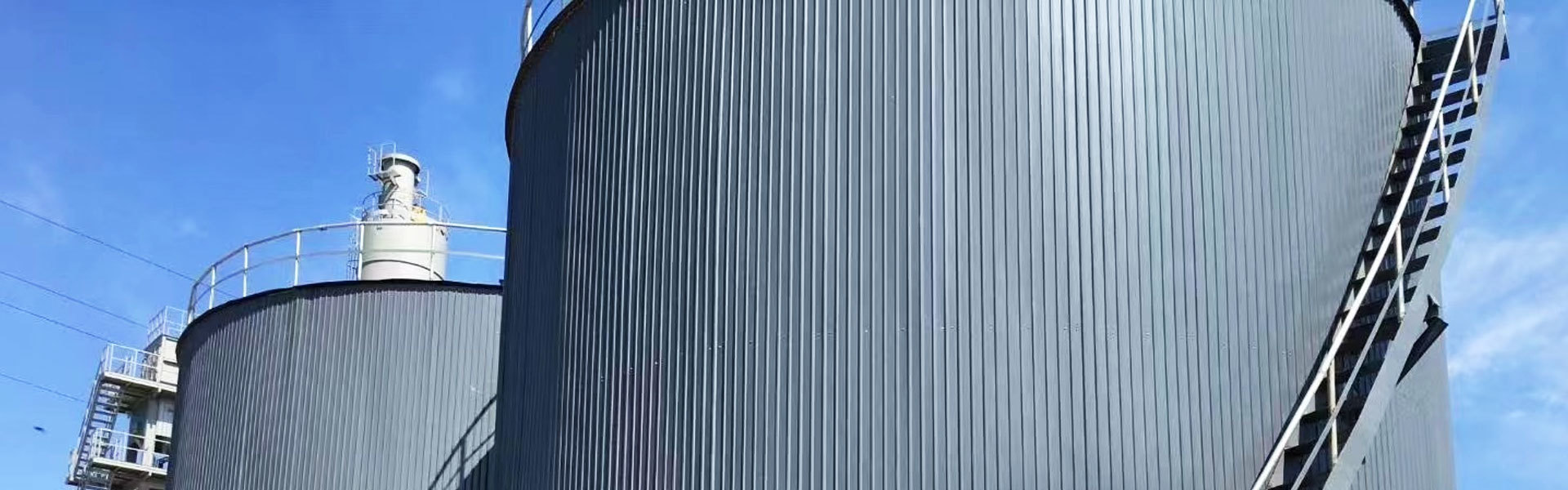
Accurate level measurement and reliable automatic control are critical for safe operation, inventory management, and process efficiency of asphalt tanks. Asphalt’s high viscosity, high temperature (12
Accurate level measurement and reliable automatic control are critical for safe operation, inventory management, and process efficiency of asphalt tanks. Asphalt’s high viscosity, high temperature (120–180℃), and tendency to solidify pose unique challenges to measurement accuracy and system stability. This article details suitable level measurement technologies, automatic control system configurations, and key implementation considerations.
1. Key Requirements for Asphalt Tank Level Measurement
Asphalt’s physical properties demand measurement solutions that address:
Resistance to high temperature, corrosion, and viscous adhesion;
Immunity to tank pressure fluctuations and thermal stratification;
High accuracy for inventory tracking (typical requirement: ±0.5% FS);
Reliability in harsh industrial environments (dust, moisture, vibration);
Compatibility with automatic control systems for real-time data transmission.
2. Suitable Level Measurement Technologies for Asphalt Tanks
2.1 Radar Level Transmitters (Recommended for Most Scenarios)
Working Principle
Non-contact measurement using microwave signals (24GHz or 80GHz) that reflect off the asphalt surface, calculating level based on signal travel time.
Advantages
Non-contact design avoids adhesion from viscous asphalt;
High accuracy (±0.1%–±0.3% FS) and wide range (0–30m);
Resistant to high temperature, dust, and vapor;
Suitable for vertical/horizontal tanks and those with agitators.
Implementation Notes
Choose 80GHz radar for better vapor penetration and narrower beam angle;
Install at tank top, avoiding inlet pipes or agitators;
Select models with built-in temperature compensation.
2.2 Ultrasonic Level Transmitters
Working Principle
Non-contact measurement using ultrasonic waves, with level calculated by reflection time.
Advantages
Lower cost than radar;
Simple installation and maintenance;
Suitable for small to medium tanks (0–15m range).
Limitations & Mitigations
Susceptible to vapor/dust interference (install barriers or choose compensated models);
Reduced accuracy with strong agitation (avoid nearby installation);
Not ideal for tanks with complex internals.
2.3 Capacitance Level Transmitters
Working Principle
Contact measurement detecting capacitance changes between a probe and tank wall, proportional to level.
Advantages
Reliable in high-temperature, high-viscosity environments;
Suitable for narrow tanks or limited top access;
Resistant to vibration and pressure fluctuations.
Limitations & Mitigations
Probe adhesion risk (choose PTFE-coated or heated probes);
Requires proper grounding to avoid interference;
Verify corrosion resistance for tanks with aggressive additives.
2.4 Guided Wave Radar (GWR) Level Transmitters
Working Principle
Semi-contact measurement using guided waves along a cable/rod, ideal for tanks with complex internals.
Advantages
Narrow path reduces interference from heating coils;
Higher accuracy than standard radar in small/irregular tanks;
Suitable for high-temperature (up to 250℃) and high-pressure applications.
Implementation Notes
Ensure probe avoids contact with internal structures;
Choose heat-resistant materials (e.g., Inconel);
Regularly inspect for asphalt buildup.
3. Asphalt Tank Automatic Control System Design
The system integrates level data with temperature, pressure, and flow controls to optimize asphalt storage and transfer.
3.1 System Components
① Sensing Layer
Level transmitters (radar/GWR recommended);
PT100 temperature sensors;
Pressure transmitters;
Inlet/outlet flow meters.
② Control Layer
PLC or DCS for central control;
HMI for visual monitoring and manual operation;
Safety interlock modules.
③ Execution Layer
High-temperature sealed inlet/outlet valves;
Heated transfer pumps;
Heating system controllers;
Audible/visual alarms for anomalies.
3.2 Core Control Functions
① Level Control
High/low level alarms (e.g., 90% full/10% empty);
Automatic inlet/outlet valve/pump regulation;
Real-time inventory tracking with temperature compensation.
② Temperature-Level Interlock Control
Prevent cold asphalt feeding into hot tanks;
Stop heating if level is too low (avoid dry burning);
Adjust heating power based on level and temperature.
③ Safety Control
Emergency shutdown for persistent high-level alarms;
Pressure relief valve activation;
Heating system cut-off for temperature anomalies.
4. Key Implementation Considerations
4.1 Installation Best Practices
Install transmitters ≥30cm from tank walls, inlets, and agitators;
Ensure contact probes reach tank bottom without obstruction;
Seal all penetrations to prevent heat loss and vapor leakage;
Regularly calibrate with reference measurements (e.g., dipstick).
4.2 Maintenance and Calibration
Clean non-contact sensors periodically;
Inspect contact probes for adhesion/corrosion;
Calibrate transmitters every 6–12 months (more for critical applications);
Test safety interlocks monthly.
4.3 Environmental Adaptations
Choose explosion-proof components (Ex d IIB T4 or higher) for flammable